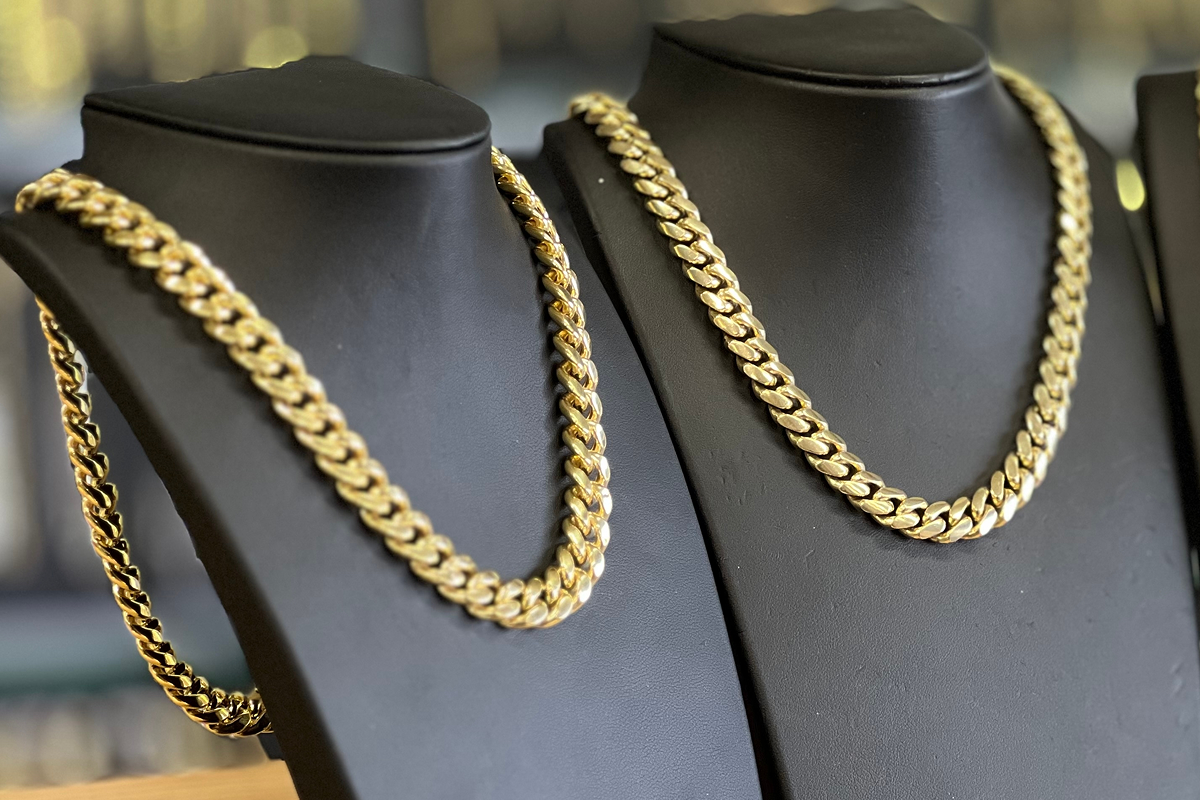
Two gold chains sit on the counter. Same length, same style, same 14K stamp, and to the eye they’re indistinguishable. One is worth a few hundred dollars. The other is worth several times that. Customers are often surprised by the gap, and the explanation isn’t the karat stamp or the brand. It’s what’s inside the links. Understanding hollow gold vs solid gold is the single most useful thing you can know before you sell, pawn, or even buy a chain.
What Is Hollow Gold?
So what is a hollow gold chain? It’s a chain whose links are tubes rather than solid rods. The metal is real gold at the karat it’s stamped, but each link is formed around an empty core, so the finished chain contains far less gold than its size suggests. Manufacturers build chains this way for a practical reason: it lets them produce a thick, substantial-looking piece at a fraction of the material cost, which is why a wide, bold chain can carry a surprisingly modest price tag at retail.
Nothing about this is deceptive on its own. Hollow construction is a legitimate, common manufacturing choice, and plenty of people knowingly buy hollow pieces because they want the look without the weight or the cost. The problem only shows up when someone assumes they own something they don’t, usually at the moment they try to sell it.
What Is Solid Gold, and What It Doesn’t Mean
A solid gold chain has links formed from solid metal with no hollow interior. Every millimeter of the link is gold alloy, which is why a solid piece feels noticeably denser than a hollow one of identical dimensions.
Here’s the part that trips people up: solid gold does not mean pure gold. Those are two separate ideas that get used interchangeably and shouldn’t be. Solid describes the construction method, meaning there’s no empty space inside. Karat purity describes how much of the alloy is actually gold. A solid 10K gold chain is solid all the way through, but only about 41.7 percent of it is gold, with the rest being alloy metals added for durability. Pure gold is 24K, and it’s far too soft for a chain anyone intends to wear.
What Is Semi Solid Gold?
Semi solid gold sits between the two. In a semi-solid chain, some components are solid while others are hollow, or the links have thicker walls than a fully hollow piece without being completely filled. You’ll often see this in chains where the links are hollow but the clasp and connecting hardware are solid, or in designs where alternating sections differ.
Semi-solid construction is the hardest category to identify by feel, because the weight lands in an ambiguous middle range. It’s also why a hands-on jewelry evaluation matters more for chains than for almost any other piece of jewelry. A ring is usually obvious. A chain often isn’t.
Where the Value Difference Actually Comes From
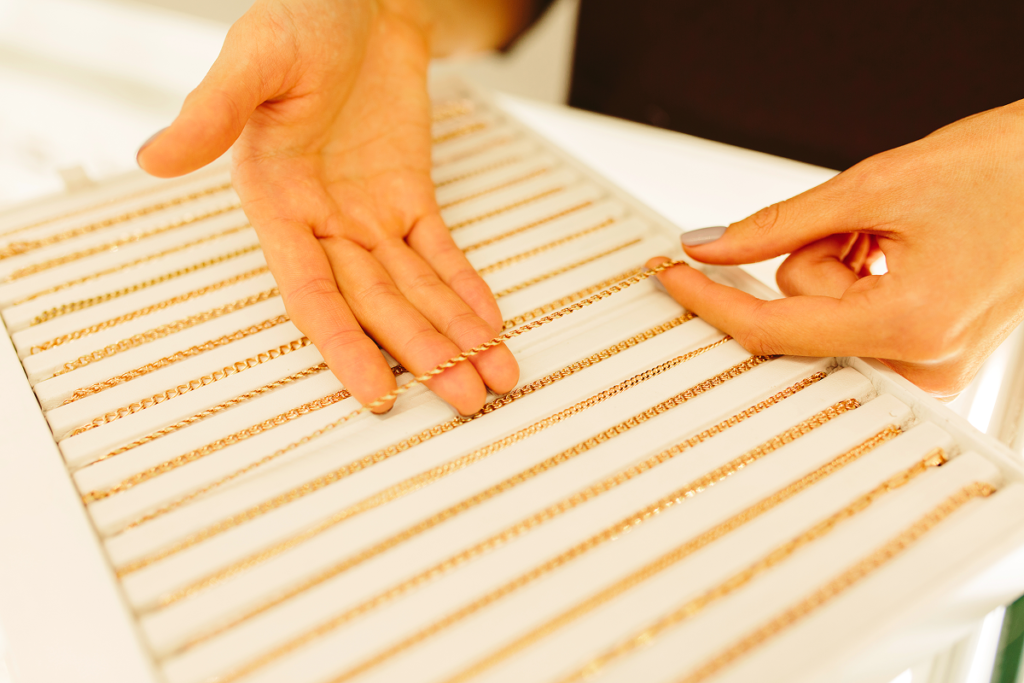
When we make an offer on a chain, we’re weighing more than how impressive it looks. Four things determine the number: the designer behind the piece, the karat it’s stamped at, what it weighs on the scale, and what gold is trading at that day. Most of that isn’t visible from across the room.
Gram Weight Is What Gets Paid
Gold is bought and sold by weight. A solid chain and a hollow chain of the same length and width can differ in gram weight by a factor of three or more, and that ratio carries straight through to the offer. It’s the main reason two chains that look alike often aren’t worth alike, since the hollow one simply contains less gold. Weight on its own doesn’t settle the value, though. It has to be read alongside karat purity and, for some pieces, the designer behind them.
Karat Purity Sets the Percentage
Karat purity determines what share of that weight is actually gold. 10K gold is roughly 41.7 percent gold, 14K gold is about 58.3 percent, and 18K gold is 75 percent. A chain’s precious-metal value is its gram weight multiplied by its purity, which is why a heavier low-karat chain can be worth less than a lighter high-karat one.
The Gold Spot Price Sets the Rate
The gold spot price is the live global market rate for an ounce of pure gold, and it shifts daily. Once we know weight and purity, the spot price on the day you’re standing in the shop converts that into a dollar figure. It’s the one variable neither of us controls.
How to Tell If Your Chain Is Hollow or Solid
Sorting out hollow vs solid gold at home isn’t always possible, but a few checks are worth doing before you come in. None are conclusive on their own, and together they’ll usually point you in the right direction.
Weight in the Hand
This is the most reliable quick test. Solid gold is dense in a way that’s genuinely surprising the first time you feel it. If a thick, wide chain feels light for its size, hollow construction is the most likely explanation.
The Clasp and End Caps
Look closely at where the chain terminates. Hollow links are often capped or crimped shut at the ends, and under magnification you can sometimes see the seam where the tube was closed. A solid chain has no seam to hide.
Sound and Flexibility
A hollow chain tends to sound slightly tinny when handled and drapes with less weight. Solid links have a duller, heavier sound. This is subtle and easy to misread, so treat it as a hint rather than proof.
Why Home Tests Only Go So Far
Dents tell you something too, since hollow links crush or kink under pressure that a solid chain shrugs off, but please don’t go looking for that answer by squeezing your jewelry. Damage lowers what a piece brings on resale, and a dented hollow chain is worth less than an intact one. Bring it in instead and let the testing do the work.
Does Hollow Gold Have Resale Value?
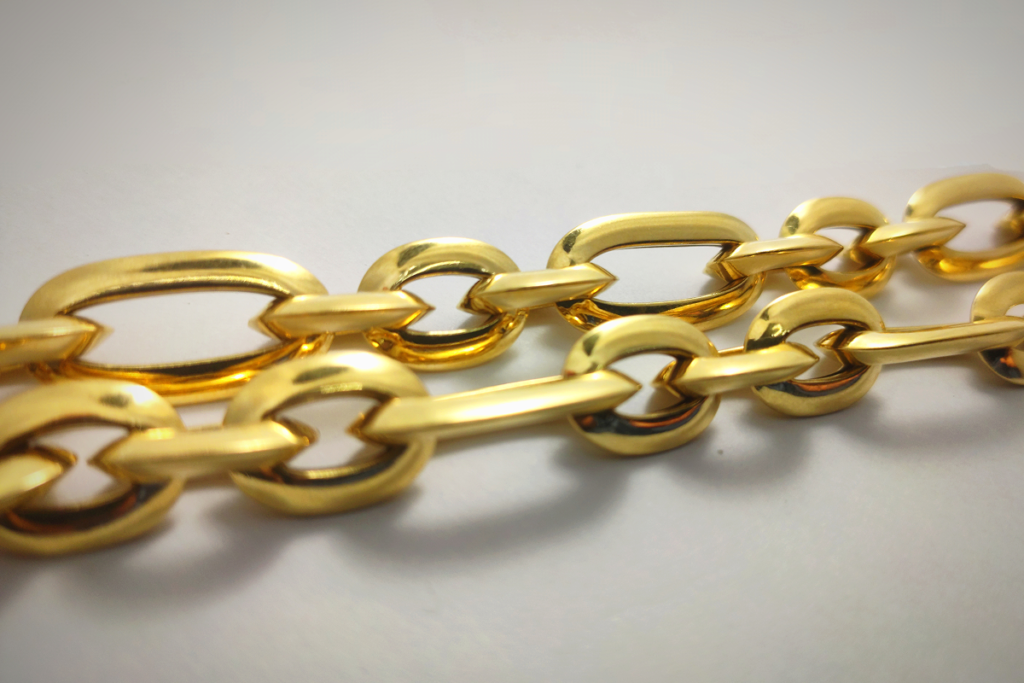
Yes, and this is worth saying plainly because people sometimes arrive braced for bad news. Hollow gold is real gold. It has genuine precious-metal value and we buy it regularly. The offer is simply proportional to how much gold is actually there, which is less than a solid piece of the same dimensions. In any solid gold vs hollow gold comparison at matching sizes, the solid piece wins on weight, but that never makes the hollow one worthless.
What tends to sting isn’t the offer itself, it’s the gap between the offer and what someone paid at retail. That gap exists for every piece of jewelry regardless of construction, since retail pricing includes design, branding, and markup that no resale market returns. Knowing your chain’s gold chain resale value ahead of time is the best defense against that surprise. If you’d like the wider context on how resale works, our guide covering what a pawn shop is walks through it.
How We Evaluate a Gold Chain at Goodfellas
Every chain goes through the same process, and you’re welcome to watch all of it happen at the counter.
Hallmark and Karat Stamp Check
We start by locating the hallmark, usually on the clasp or a tag near it. A karat stamp is a useful starting point, but it isn’t proof of anything. Stamps can be worn, inaccurate, or applied to plated pieces, which is exactly why we never stop there.
Electronic Gold Testing
Electronic gold testing reads the actual metal composition rather than trusting the marking. For chains this matters twice over, since it confirms both that the piece is gold and that the karat matches what’s stamped on it. We’ll also test at more than one point on a chain when the construction looks inconsistent.
Weight and Chain Dimensions
The chain is weighed to the gram and measured for length and thickness. Comparing the weight against the chain dimensions is the clearest indicator of hollow versus solid construction. A chain that measures large but weighs light is telling us exactly what it is.
Your Offer, Explained
You get the number and the reasoning behind it: the designer or maker if the piece has one, the karat we measured, the weight on the scale, the construction, and how all of that combines at the current spot price.
Should You Pawn or Sell Your Gold Chain?
Once you know what your chain is worth, you have two directions. Selling ends the transaction that day and puts the full amount in your hand, which makes sense for a piece you’re finished with. You can sell luxury items in West Covina outright any day we’re open.
A collateral loan is the better fit when the chain carries meaning you’d rather not give up. The piece stays in secure storage, you get cash the same day, and you have a set window to repay and take it back. Our pawn shop loans work the same way for chains as for any other item, and you can read more about how we handle cash for gold in West Covina or pawn jewelry in West Covina before you visit.
Frequently Asked Questions
Can a Hollow Gold Chain Have the Same Karat as a Solid Gold Chain?
Yes. Karat and construction are completely independent. A hollow 14K chain and a solid 14K chain are both genuinely 14K gold, meaning the alloy in each is about 58.3 percent gold. The difference is how much of that alloy is physically present, which is where the value gap comes from.
Can a Hollow 18K Chain Be Worth More Than a Solid 14K Chain?
It can, though it depends entirely on the weights involved. 18K is 75 percent gold against 14K’s 58.3 percent, so a hollow 18K piece carries a higher purity. If that chain is substantial enough that its gold content exceeds a small solid 14K chain’s, it wins. A large solid 14K chain will usually still come out ahead. Weight and purity have to be considered together, never separately.
Does a Heavier Gold Chain Always Have More Value?
Not always. Purity has to enter the equation, and so does the maker. A heavy 10K chain can be worth less than a lighter 18K chain, since the 10K piece is only about 41.7 percent gold while the 18K is 75 percent. A signed designer chain can also outrun a heavier unbranded one on brand demand alone. Weight matters enormously, but only alongside the karat it’s multiplied against and the name on the clasp, if there is one.
Can a Gold Chain Be Partially Hollow?
Yes, and semi-solid construction is more common than most people realize. Some chains pair hollow links with a solid clasp, others alternate solid and hollow sections, and some use thicker tube walls that sit between the two categories. These are the hardest chains to judge by feel, which is why testing beats guessing.
Does a Karat Stamp Prove That a Chain Is Genuine Gold?
No. A karat stamp indicates what the manufacturer claims, and it’s a reasonable starting point, but stamps wear down, get applied incorrectly, and occasionally appear on plated pieces that contain almost no gold. Electronic gold testing is what actually confirms composition, and it’s part of every evaluation we do.
Is Solid Gold the Same as Pure Gold?
No, and this is the most common mix-up we hear. Solid refers to construction, meaning no hollow interior. Pure refers to karat purity, meaning how much of the alloy is gold. Pure gold is 24K and too soft for everyday chains, so nearly every solid chain you’ll encounter is 10K, 14K, or 18K, mixed with other metals for strength.
Bring Your Chain In and Find Out What It’s Worth
If you’ve been wondering whether the chain in your drawer is hollow or solid, there’s no substitute for putting it on a scale and a tester. It takes a few minutes, it costs nothing, and you’re under no obligation to do anything with the answer. Stop by our pawn shop in West Covina during business hours, no appointment needed, and we’ll tell you exactly what you have.